Jun. 24, 2026
Managing logistics costs is an essential part of global store fixture sourcing. Most brand managers focus heavily on factory manufacturing prices, but overlook how freight charges can impact their initial procurement budget. Because custom retail hardware is often lightweight but highly voluminous, international logistics costs can sometimes equal or exceed the actual fabrication cost of your cosmetic display stand inventory. Sourcing teams can mitigate these unexpected expenses by understanding key logistics drivers—such as volumetric weights, container capacity utilization, and custom packaging engineering—before starting mass retail rollouts.
The primary factor affecting international retail fixture shipping invoices is the ratio between physical mass and spatial footprint. Because custom point-of-sale setups are designed with large structural footprints to hold products, they are classified as high-volume, low-density cargo. Global freight forwarders calculate charges using a strict dimensional weight fee cosmetic display fixture formula rather than actual deadweight.
This means a tall, fully assembled acrylic counter display may weigh very little but occupy significant cargo volume, drawing higher freight rates than a heavy, compact raw metal component. When handling large orders with products stacked on pallets, unoptimized outer packaging can leave empty spatial pockets, driving up the volumetric calculation and inflating landing costs across the entire distribution network.
The total volume of an order dictates the cross-border transport method and its economic efficiency. Sourcing teams can achieve significant cost advantages by choosing between Full Container Load (FCL) shipping and Less Than Container Load (LCL) alternatives:
FCL Efficiency: Utilizing dedicated ocean containers allows procurement teams to distribute fixed ocean freight costs across thousands of completed units. This method minimizes terminal handling fees, eliminates intermediate warehouse transfers, and avoids sorting operational delays.
LCL Disadvantages: Smaller orders must share container space with third-party freight. This approach introduces complex warehouse destination handling fees, intensive local sorting charges, and increased risk of transit damage during multi-stage handling, often doubling the per-unit shipping cost.
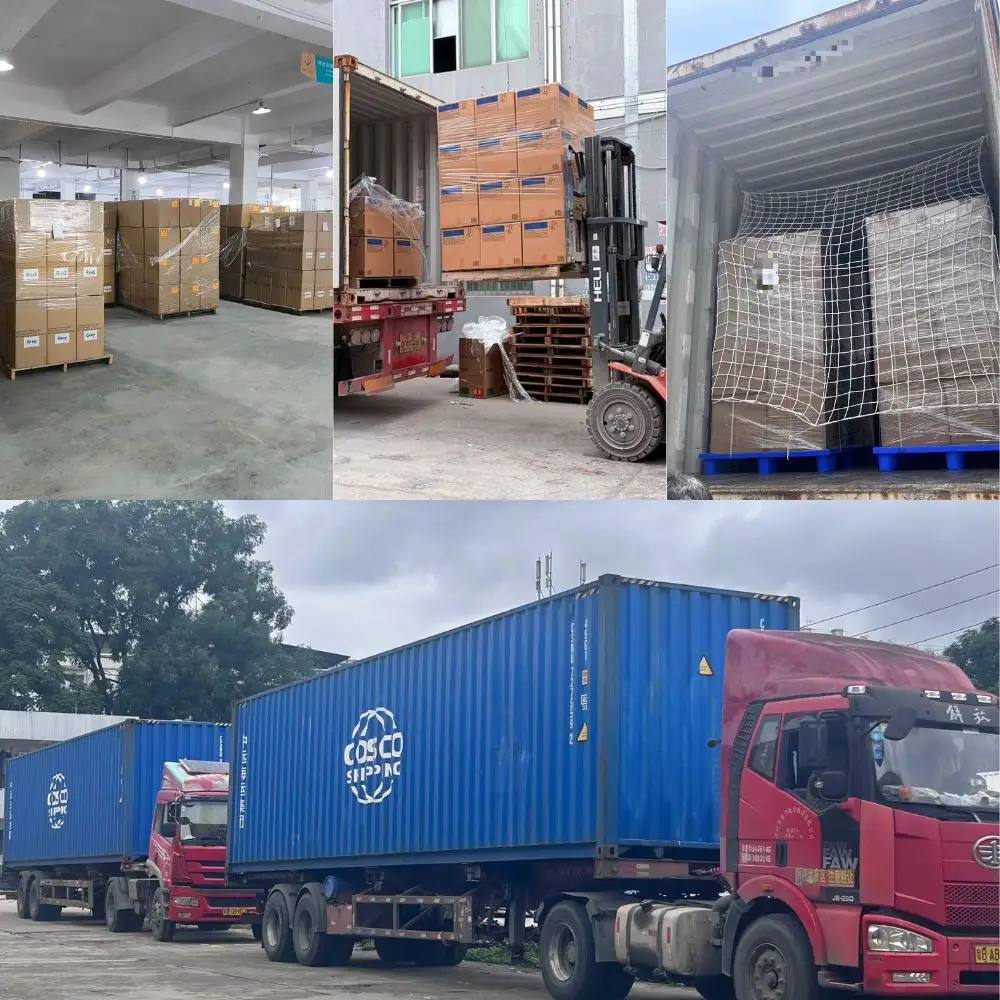
The physical process of loading a container involves critical manual procedures that generate separate backend processing fees. Standard ex-works factory quotes frequently omit the labor and materials needed for proper sea container enforcement. Safe international transit requires specialized forklift operation for heavy pallets, clear documentation, and custom container stabilization mechanisms.
To secure delicate retail components during sea transport, logistics teams must use premium high-strength protective netting, heavy-duty edge corner guards, extensive stretch-wrapping, and certified ISPM-15 fumigated wooden pallets. Furthermore, if a brand's distribution schedule requires holding inventory temporarily due to store build-out delays, the supplier's warehouse will charge daily commercial storage fees that must be accounted for in the initial budget.
The raw materials chosen during the early design phase directly influence downstream freight costs. High-purity cast acrylic components are relatively lightweight, which helps minimize volumetric weight surcharges but requires careful handling to prevent scratching. In contrast, heavy metal floor fixtures add significant physical weight to global shipments, requiring extra-thick protective cardboard crating and shock-absorbing internal foam. These protective layers further expand the outer box volume, increasing container footprint requirements and driving up freight costs for large rollouts.
Procurement teams often face a difficult choice between initial component cost savings and the long-term cost of shipping protection. Choosing minimal thin-film wrapping can lower initial packaging costs and reduce outer box dimensions, but it significantly increases the risk of product breakage during ocean transit. When fragile sub-assemblies sustain damage, brands must pay for emergency replacement manufacturing and high-priority air freight to meet retail launch dates. Investing in robust, export-grade double-wall boxes paired with high-density foam padding provides a more secure and predictable total landed cost.
Choosing the right mode of transport requires careful coordination between merchandising launch timelines and capital allocation constraints. Ocean freight utilizing large container ships offers the most economical solution for high-volume rollouts, allowing supply chain managers to maintain predictable operating margins. Air freight provides rapid transit for tight deadlines, but its premium cost can quickly erode campaign profitability. Sourcing managers should align their manufacturing schedules to maximize ocean container timelines and minimize reliance on expensive air shipping.
To optimize distribution budgets and protect global supply chains from unexpected shipping fees, procurement organizations should implement these strategic guidelines:
Consolidate regional production requirements into single mass orders to achieve Full Container Loads (FCL) and minimize per-unit ocean freight overhead.
Incorporate flat-pack knock-down (KD) structural engineering during the design phase to minimize individual box volumes and optimize container capacity.
Standardize outer carton dimensions to ensure tight, uniform pallet stacking and eliminate empty spaces inside sea containers.
Require suppliers to include all local loading fees, palletization costs, and custom documentation charges as explicit line items in their initial quotes.
Q: Why is dimensional weight calculation so critical for a cosmetic display stand rollout?
A: Because retail fixtures are high-volume but lightweight, global carriers charge based on the total physical space occupied rather than mass, making efficient packaging design essential to controlling costs.
Q: How does a flat-pack design help lower the export packaging cost beauty POP display stand budget?
A: Knock-down (KD) engineering allows components to pack flat, significantly reducing individual box volumes, increasing container capacity, and lowering per-unit ocean freight costs.
Q: What hidden port-of-entry fees should be confirmed in a factory shipping quote?
A: Sourcing teams must verify local container loading fees, certified pallet fumigation costs, custom documentation preparation, and potential terminal storage charges before dispatching shipments.
Q: Is ocean container consolidation efficient for multi-brand cosmetic display fixture orders?
A: Yes. Consolidating multiple regional orders into a single Full Container Load (FCL) helps eliminate expensive LCL sorting charges and minimizes terminal handling fees at the destination port.
Q: Where can I find more technical information regarding export packaging regulations and shipping standards?
A: You can review our comprehensive manufacturing FAQ directory for detailed technical documentation on international compliance and logistics optimization.
Optimizing logistics costs in retail fixture sourcing requires a clear understanding of packaging design and container capacity utilization. Partnering with an experienced manufacturer who can provide both efficient structural engineering and strategic freight management is key to maintaining project budgets. As a premier provider of custom retail environments, TERMEIN Display helps brands streamline global distribution through our comprehensive dual-facility manufacturing footprint. Operating a 25,000 m² production center in China alongside an efficient 5,000 m² facility in Vietnam, we combine over 100 automated high-precision production lines with a team of 160+ experienced technical specialists. Our dual-region infrastructure supports a reliable daily production capacity of over 1,000 completed units, helping global cosmetic brands manage logistics complexity, ensure consistent manufacturing standards, and meet demanding international rollout schedules without unexpected cost overruns.
Want to eliminate unexpected freight bills and optimize your container space? Contact our logistics and engineering team today for a transparent, fully itemized quotation that includes custom packaging optimization and complete landed cost analysis for your upcoming retail rollout.
Get Landed Cost AnalysisPrice Range Analysis of Cosmetic Display Stands for Retail Brands
Acrylic vs Metal Cost Differences in Cosmetic Display Production
Latest News
Jun. 17, 2026
Why Custom Cosmetic Display Stands Help Beauty Brands Stand Out
Jun. 17, 2026
How to Choose a Reliable Cosmetic Display Manufacturer for Your Brand
Jun. 17, 2026
Freestanding vs Countertop Cosmetic Displays: Which One Fits Your Retail Space?
Jun. 24, 2026
What Factors Affect Cosmetic Display Stand Manufacturing Costs
Jun. 24, 2026
Jun. 24, 2026
How Retail Brands Budget for Custom Cosmetic Display Fixtures
Fulfill Your Custom Desires
01. Demand confirmation
02. Initial quotation
03. 3D Effect confirmation
04. Sample production
05. Sample effect confirmation
06. Bulk order production
07. Quality inspection
08. Shipment
:
Mob.: +86 166 7095 3112
Email: sztemei27@sztdp.com
WhatsApp: +86 173 1806 7256
WeChat: 16670953112
China Factory: Shenzhen Termein Display Products Co., Ltd.
China Address: Building B1, Anda Industrial Park, Fenggang Town. Dongguan City, Guangdong Province, China.
Vietnam Factory: CÔNG TY TNHH SẢN PHẨM TRƯNG BÀY DISPU ( VIỆT NAM )
Vietnam Address: B4 Địa chỉ Thửa đất số 60, tờ bản đồ số 40, Ấp Cầu Sắt, Xã Lai Hưng, phường bến cát, thành phố hồ chí minh,Việt Nam.
Quick Navigation
Custom Vape Display